
South Korean and U.S. Researchers Unveil Hands-Free Robotic Suit
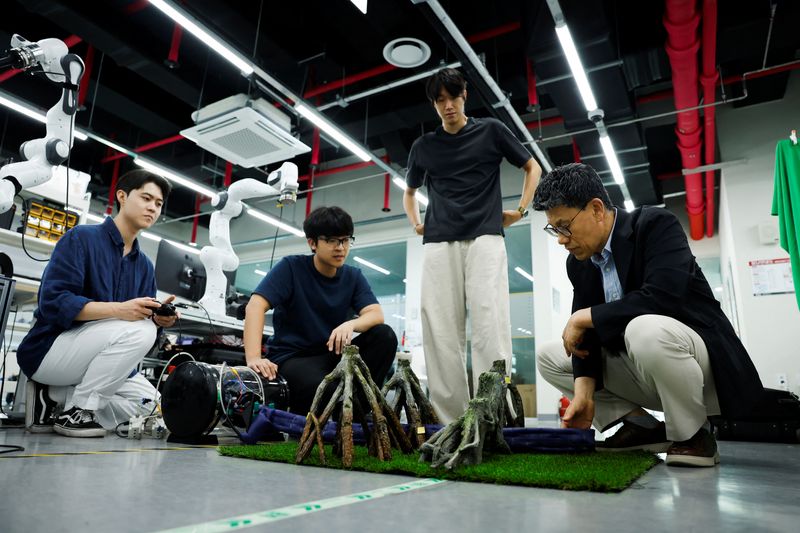
Researchers from South Korea and the United States have developed robotic technology that enables individuals to don specialized suits without manual assistance.
Hands-Free Suit Integration
A collaborative research team comprising experts from South Korea and the United States has introduced a novel robotic system designed to automate the process of dressing. This technology allows a wearer to enter a robotic or specialized suit entirely independently, eliminating the need for manual manipulation or external help.
The system focuses on overcoming the physical complexities involved in traditional donning procedures. By utilizing automated mechanisms, the technology addresses mobility challenges that often prevent users from securing wearable equipment on their own.
Technological Capabilities
The core functionality of this advancement lies in its ability to guide the wearer's limbs and torso into the correct positions within the suit. This automation is intended to streamline the transition between a resting state and an active, assisted state, which is particularly useful for specific industrial or medical applications.
Key features of the unveiled technology include:
- Autonomous Donning: The capability to enter the suit without the use of hands.
- Zero External Aid: A design that removes the requirement for a secondary person to assist with the fitting process.
- Robotic Precision: Automated guidance to ensure the wearer is correctly positioned for optimal suit performance.
Potential Applications
While the specific commercial roadmap was not detailed, the development of hands-free robotic suits holds significant implications for several sectors. In healthcare, such technology could assist patients with limited upper-body mobility in managing daily tasks or therapeutic exercises.
In industrial and military environments, the ability to quickly and independently suit up in protective or exoskeletal gear can increase operational efficiency. Reducing the time and personnel required for equipment deployment remains a primary goal for such robotic integrations.